

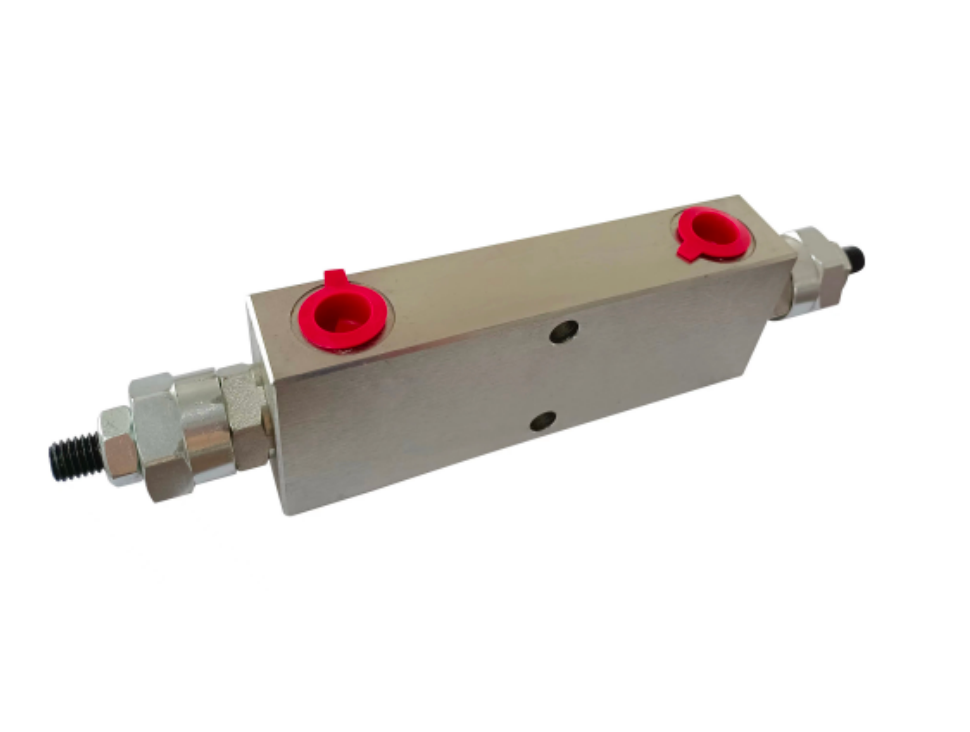
 A Double Counterbalance Valve With In Line Body is essential for excavator boom safety. It prevents uncontrolled boom descent during a hydraulic hose burst. This protects operators, equipment, and the environment. The valve locks the cylinder’s position when pressure is lost. It ensures boom stability, even with catastrophic hydraulic failure. Hanshang Hydraulic champions innovative solutions.
Key Takeaways
- A Double Counterbalance Valve keeps excavator booms safe. It stops the boom from falling if a hose breaks. This protects workers and the machine.
- This valve holds the boom steady. It works even if the hydraulic system fails. This prevents accidents and damage.
- The valve’s design helps it fit well. It makes the system work better. It also makes the system more reliable.
Understanding the Critical Risk: Hydraulic Hose Bursts in Excavator Boom Cylinders
 The Peril of Uncontrolled Boom Movement
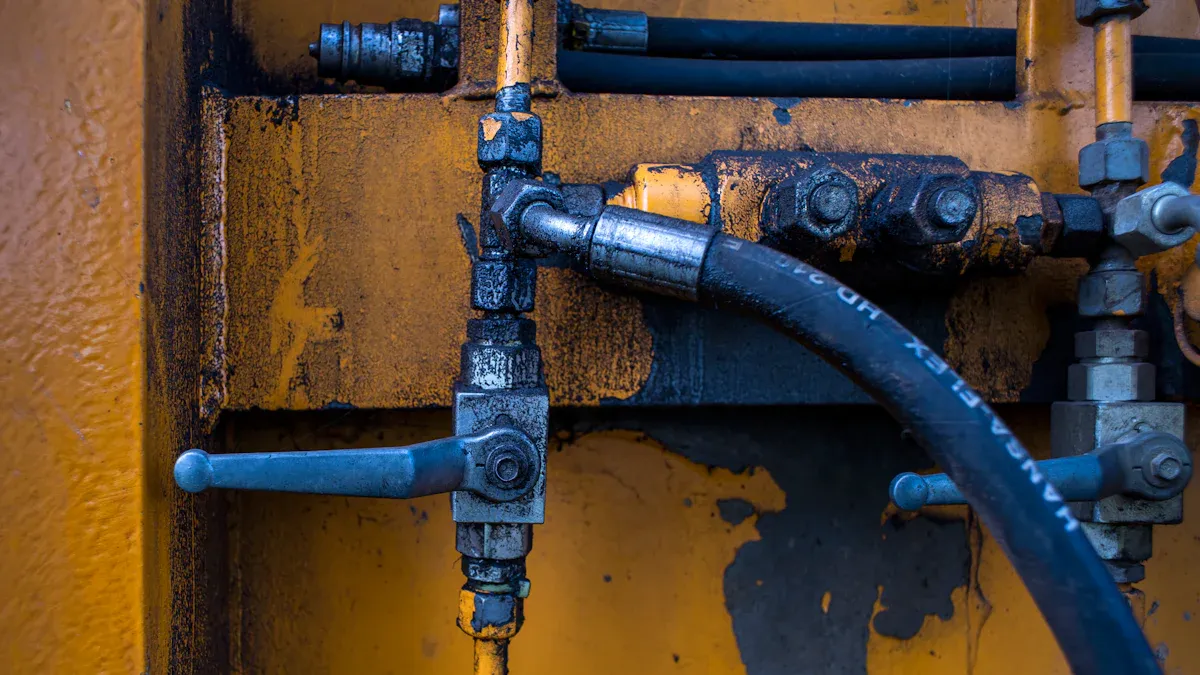
Hydraulic hose bursts on excavators present a critical safety risk. A sudden failure in the boom cylinder’s hydraulic system can trigger catastrophic events. The excavator boom, carrying significant weight, instantly loses its hydraulic support. It then descends rapidly and without control. This uncontrolled movement creates immediate and severe dangers. Operators face serious injury. The equipment itself can suffer extensive damage. Furthermore, surrounding infrastructure and personnel are also at high risk. Such incidents underscore the absolute necessity for robust safety mechanisms. These systems prevent unexpected boom drops.
Common Causes of Hydraulic Hose Failure
Many factors contribute to hydraulic hose failure. Understanding these causes is crucial for accident prevention. Abrasion often causes failure. Hoses rub against other components or rough surfaces. This wears down the outer cover. Internal erosion also occurs when high-pressure fluid damages the inner lining. Improper installation creates many problems. Incorrect attachment of fittings or poor crimping leads to leaks. Issues like excessive bending, twisting, or incorrect routing also stress the hose. This causes premature failure.
Environmental conditions significantly impact hose life. Temperature extremes degrade hose materials. High temperatures cause material breakdown. Low temperatures lead to brittleness and cracking. Prolonged exposure to UV radiation from direct sunlight weakens and cracks the outer cover. Abrasive debris, such as dirt and rocks, wears down the protective outer layer. Chemical exposure from oils, fuels, or cleaning agents can degrade hose materials. This results in swelling or brittleness. Pressure surges, sudden spikes in hydraulic pressure, can exceed the hose’s rated capacity. This causes bursts or leaks. Using an incorrect hose size also contributes to failure. A hose too small cannot handle system pressure effectively.
How a Double Counterbalance Valve With In Line Body Operates for Ultimate Safety
A Double Counterbalance Valve With In Line Body provides essential safety for hydraulic systems. It uses several mechanisms to ensure controlled movement and prevent accidents. Understanding these operations reveals how the valve protects equipment and personnel.
Core Function: Pressure-Actuated Locking and Load Holding
The primary function of a counterbalance valve involves pressure-actuated locking and load holding. This mechanism ensures the excavator boom remains stable, even when hydraulic pressure is lost. When the control valve shifts to neutral, load-induced pressure forces the check valve closed. The load stays in place as long as the load-induced pressure remains below the relief function setting. If hydraulic pressure is lost, for example, if the directional valve centers or a hose breaks, the counterbalance valve’s spool and check valve close. This closure prevents oil from flowing out of the cylinder rod. By preventing oil outflow, the valve stops the load from lowering. This action effectively maintains the cylinder’s position. Counterbalance valves function as adjustable pressure relief valves. They create back-pressure in the hydraulic circuit to hold the load securely. When the control valve shifts back to neutral after lowering, the pilot pressure is lost. The relief valve then closes again, effectively holding the load in its position.
The “Double” Advantage for Bidirectional Control
The “double” aspect of a Double Counterbalance Valve With In Line Body offers a significant advantage. It provides bidirectional control for hydraulic cylinders. These valves control the movement and locking of actuators in both directions. They support and control the descent of a load in two directions. This ensures stability and controlled movement. The mechanism involves pilot operation. Powering the line opposite to the load operates a pilot line. This pilot line then manages the partial opening of the descent line. This allows for controlled movement, even with gravitational loads. It also helps prevent cavitation. A pilot ratio reduces the pressure needed to open the valves compared to the setting pressure. These valves can also act as shock-proof valves. They protect the hydraulic system from pressure peaks.
The “In-Line Body” Design: Integration and Efficiency
The “in-line body” design of the Double Counterbalance Valve With In Line Body offers superior integration and efficiency. This design means the valve installs directly into the hydraulic line. This makes it more accessible and easier to integrate into existing systems. In-line valves offer versatility. Their direct installation allows for flexible placement and configuration within hydraulic systems. This design also leads to a compact system. Integrated valves reduce the need for external piping. This results in a streamlined, space-saving system. The in-line body design also enhances reliability. It reduces leak points and provides built-in safety functions like load holding and pressure relief. Furthermore, it minimizes contamination risk. Fewer hose connections reduce the chance of hydraulic fluid contamination. This design also improves system response times. Eliminating external hydraulic control valves enhances system responsiveness.
Controlled Lowering, Overload Protection, and Anti-Cavitation
A counterbalance valve provides controlled lowering, overload protection, and anti-cavitation features. For controlled lowering, counterbalance valves limit the return flow of hydraulic fluid. This limitation continues until the rotational speed and the inlet flow match. Quick-closing spools ensure this function, even during sudden pressure drops. For overload protection, the counterbalance valve acts as a secondary relief valve. This function prevents damage to the hydraulic system. It releases pressure when over-pressurization occurs. This includes pressure caused by thermal expansion of the hydraulic fluid. The valve safeguards the system by releasing pressure when a hydraulic cylinder is at risk of being over-pressurized. This prevents potential damage. Regarding anti-cavitation, counterbalance valves prevent the actuator from moving faster than the pump can supply fluid due to the energy from the load. This action directly eliminates cavitation within the actuator. Without a counterbalance valve, gravity can pull a load down faster than the pump supplies fluid. This creates a ‘runaway load’ and can lead to cavitation. A counterbalance valve provides controlled resistance. This resistance ensures the load descends smoothly at a speed determined by the pump flow, preventing cavitation. Integrated boost check valves also help prevent cavitation during transition periods.
Key Benefits of Implementing a Double Counterbalance Valve With In Line Body
Implementing a Double Counterbalance Valve With In Line Body offers numerous advantages. These benefits extend across safety, equipment longevity, regulatory adherence, and operational efficiency. This valve is a crucial component for modern hydraulic systems.
Unparalleled Operator Safety and Accident Prevention
Operator safety is paramount in any heavy machinery operation. A Double Counterbalance Valve With In Line Body significantly enhances this safety. It prevents several dangerous scenarios. The valve stops uncontrolled motion during the extension and retraction of hydraulic cylinders. It also eliminates runaway conditions in either direction of movement. This prevents system instability caused by improper pressure settings. The valve ensures the boom remains stable. It prevents uncontrolled movement or dropping of suspended loads if oil pressure is lost. This directly reduces accidents when dealing with heavy loads. It also prevents accidents during unexpected system failures, such as a hose burst. Operators can work with greater confidence and security.
Robust Equipment and Infrastructure Protection
The protection of equipment and surrounding infrastructure is another major benefit. Uncontrolled boom movement can cause severe damage. It can bend or break structural components of the excavator. It can also damage attachments. The Double Counterbalance Valve With In Line Body prevents these destructive events. It maintains the boom’s position even during hydraulic failure. This safeguards the machine from impact damage. It also protects nearby structures, vehicles, or other equipment from accidental strikes. This proactive protection extends the lifespan of the excavator. It also reduces costly repairs and replacements.
Compliance with Safety Regulations and Industry Best Practices
Adhering to safety regulations and industry best practices is essential for all operations. The Double Counterbalance Valve With In Line Body helps companies meet these critical standards. International standards like EN 474 and ISO 8643 mandate the use of pipe-rupture safety devices. These devices function as load-holding valves on excavators. They are required when a lifting device, such as a load hook, attaches to the excavator bucket. This applies if the device can lift more than one metric ton. These valves are also necessary on actuators where dangerous situations for people can occur. This includes equipment used for material handling and demolition. Valves like Hyspecs SAFEX are designed to prevent uncontrolled lowering of boom/stick cylinders. This contributes to load holding and lowering systems that comply with ISO 8643, as well as AS 1418.8. Implementing these valves ensures legal compliance and promotes a safer work environment.
Enhanced Operational Reliability and Reduced Downtime
Operational reliability and reduced downtime are critical for productivity. Counterbalance valves significantly contribute to both. They control the movement of hydraulically supported loads in both assistive and resistive conditions. They ensure tight load holding when the machine is not in operation. This prevents unexpected movement. Counterbalance valves act as safety elements. They prevent negative consequences from connecting hose failures. They also prevent issues arising from abrupt interruptions of flow supply. These features lead to a measurable improvement in machine availability. The mean time between valve-related failures can increase approximately sixfold. Maintenance hours associated with emergency valve work also decrease. This means excavators spend more time working and less time in the repair shop.
Hanshang Hydraulic’s Commitment to Excellence in Double Counterbalance Valve Technology
Pioneering Innovation and Advanced R&D in Hydraulic Valves
Hanshang Hydraulic leads the industry through continuous innovation. A dedicated and pioneering R&D team drives their development. This team works closely with heavy machinery manufacturers. They understand specific operational needs. Designers use advanced 3D software like PROE. They combine it with Solidcam. This ensures high efficiency, reliability, and accuracy in product development. Hanshang Hydraulic also developed a hydraulic valve test bench with Zhejiang University. This test bench integrates a data acquisition system. It tests pressures up to 35MPa and flows up to 300L/Min. This allows precise evaluation of dynamic, static, and fatigue life for various hydraulic valves.
State-of-the-Art Manufacturing and Quality Assurance
Hanshang Hydraulic employs state-of-the-art manufacturing techniques. They use modular designs for customization. This reduces lead times and production costs. Automation is key. They incorporate high-precision grinding machines, honing machines, and CNC digital lathes. High-precision machining centers streamline production. This ensures consistent quality and exact specifications. Hanshang Hydraulic has continuously invested in production and management systems. They achieved a “digital workshop” designation in 2022. The company holds ISO9001-2015 quality management system certification. They also have CE mark certification for hydraulic valves exported to Europe. These certifications underscore their commitment to rigorous testing and validation.
Global Reach and Trusted Partnerships
Hanshang Hydraulic builds trusted partnerships globally. They aim to forge a renowned brand in the hydraulic field. Their commitment to product quality and customer satisfaction earns them a high reputation. Hanshang Hydraulic’s industrial hydraulic valves, mobile hydraulic valves, and screw-in cartridge valves sell well across China. They also export to over 30 countries and regions worldwide, including Europe and America.
Installation and Maintenance for Optimal Double Counterbalance Valve Performance
Proper Sizing and Strategic Placement
Correctly sizing and placing a double counterbalance valve is crucial for its effective operation. Engineers must consider several factors when selecting a valve. They determine the maximum load the valve needs to hold. This dictates the appropriate pressure rating. The system’s required flow rate is also important. The valve’s flow capacity must handle maximum flow without excessive pressure drop. The pilot ratio influences the valve’s opening. A lower ratio demands higher pilot pressure, while a higher ratio requires less. Mounting style and port sizes must match the existing system. Specific requirements, such as an integrated free-flow check or overload protection, also guide selection. Understanding the system’s operating parameters, including closed-center or open-center directional valves, is vital. Proper placement of the counterbalance valve, especially with directional valves to the cylinder, ensures optimal performance.
Improperly sized or placed valves lead to inefficient operation and dangerous failures. Undersized valves cannot handle the required flow rate. This causes pressure drops and reduced performance. A pressure setting that is too low results in the load not being held securely. This causes drift or sudden drops. A pressure setting that is too high requires excessive pilot pressure to open the valve. This leads to sluggish operation. Improperly selected or failing valves contribute to accidents, equipment damage, and costly downtime. Relying solely on reliefs on the directional valve may not provide sufficient load control, especially in proportional systems that create back pressure.
Routine Inspections and Longevity Considerations
Regular inspections and proper maintenance extend the lifespan of double counterbalance valves. Operators should visually check valves for leaks, damage, or corrosion during routine equipment checks. They listen for unusual noises during operation. These noises can indicate internal issues. Technicians periodically verify the valve’s pressure settings. They ensure these settings match the manufacturer’s specifications and operational requirements. They also check the integrity of hydraulic lines connected to the valve. Contamination in hydraulic fluid can damage internal components. Therefore, maintaining clean hydraulic fluid is essential. Following the manufacturer’s recommended service intervals for fluid changes and filter replacements helps prevent premature wear. Proper maintenance ensures the valve continues to provide reliable load holding and safety. This proactive approach minimizes unexpected failures and maximizes operational uptime.
The Double Counterbalance Valve With In Line Body is a non-negotiable safety component for excavator boom cylinders. It offers unparalleled protection against hydraulic hose bursts, ensuring safer, more reliable operations. This valve safeguards personnel and assets. Leading manufacturers like Hanshang Hydraulic embed this commitment, striving to forge a renowned brand in the hydraulic field.
FAQ
What is the primary function of a Double Counterbalance Valve?
It prevents uncontrolled movement of hydraulic cylinders. The valve locks the load in place. It ensures stability, even if hydraulic pressure is lost.
How does the “in-line body” design improve efficiency?
The in-line body design allows direct installation into hydraulic lines. This creates a compact system. It reduces leak points and enhances overall system responsiveness.
Why is this valve essential for excavator boom safety?
This valve prevents the boom from dropping unexpectedly. It protects operators and equipment from hydraulic hose bursts. It ensures the boom remains stable.