

 Sanitary back pressure regulators are fundamental for process integrity, product quality, and operational safety. They prevent costly failures and ensure compliance by controlling pressure fluctuations. Without them, systems risk equipment damage, product contamination, and inefficient operations. Improper pressure management causes approximately 35% of operational failures in chemical and petrochemical plants, emphasizing the need for a reliable pressure control system.
Key Takeaways
- Sanitary back pressure regulators are important for keeping your system safe and clean. They stop bad things from getting into products and help avoid costly problems.
- These special regulators keep pressure steady in your system. This helps protect equipment and makes sure products are made correctly.
- Choosing the right sanitary regulator is key for industries like food and medicine. It helps keep people healthy and protects a company’s good name.
The Fundamentals of a Pressure Control System
Defining Pressure Control
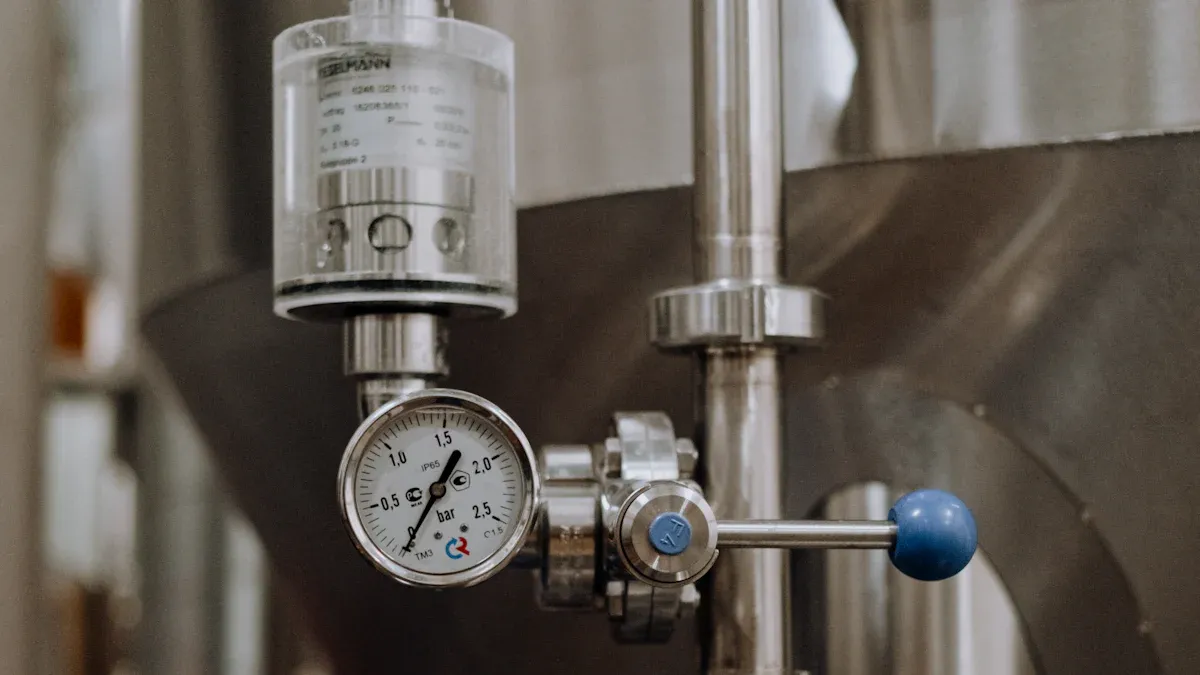
A pressure control system monitors, regulates, and maintains fluid pressure within a specific range. Its core function ensures safe and efficient operation. This involves regulating pressure within a system to prevent issues like equipment failure or process inefficiencies. Pressure control primarily focuses on maintaining stability. This differs from flow control, which prioritizes accuracy. Interestingly, both often utilize the same control valve hardware to achieve their respective objectives. Engineers use various devices and strategies to maintain desired pressure levels. This is crucial for processes in chemical engineering to maintain optimal conditions for productivity and safety.
Consequences of Uncontrolled Pressure
Uncontrolled pressure events can lead to significant financial burdens. These incidents often trigger unplanned downtime. Such interruptions can cost companies up to $260,000 per hour. This contributes to annual losses of nearly $1.5 trillion for Fortune Global 500 companies. These costs are typically 35% higher per minute than planned downtime. The financial impact includes direct costs such as lost production value and wasted materials. Companies also face premium costs for urgent repairs, expedited parts, and overtime labor. Indirect costs also arise, including loss of customer trust and damaged brand reputation. A reliable pressure control system helps avoid these costly consequences.
Decoding Pressure Control Devices
Engineers use various devices to manage pressure within a system. Each device serves a specific purpose to ensure safety and efficiency. Understanding these differences helps in selecting the correct component for any application.
Pressure Regulators: Downstream Stability
Pressure regulators primarily focus on maintaining a stable downstream pressure. They reduce a higher inlet pressure to a lower, constant outlet pressure. This ensures that equipment connected downstream receives a consistent and safe pressure level. These devices open or close to adjust flow, keeping the output pressure steady despite changes in the inlet pressure or flow demand.
Relief Valves: Safety Net for Overpressure
Relief valves act as a crucial safety mechanism. They protect systems from dangerous overpressure conditions. These valves open to release excess pressure when it exceeds a set point. Most relief valves use a spring-loaded “poppet” valve. The poppet forms a seal on a valve seat. When upstream pressure overcomes the spring force, the poppet lifts, allowing fluid to escape. Piston-style designs offer ruggedness for higher pressures, while diaphragm-style designs provide high accuracy for low-pressure needs. Key design principles include reliable pressure relief, precise control, and robust performance. Industry standards ensure these valves open at predetermined pressures. They also include redundant features to minimize failure risks.
Back Pressure Regulators: Upholding Upstream Pressure
Back pressure regulators maintain a specific pressure on the upstream side of a system. They hold pressure on production vessels and release fluid downstream only when the upstream pressure reaches a set point. This creates a pressure differential, moving fluid to the next process step.
| Feature | Pressure Reducing Regulator | Back Pressure Regulator |
|---|---|---|
| Regulated Pressure | Downstream pressure (outlet) | Upstream pressure (inlet) |
| Main Purpose | Reduces and stabilizes downstream pressure | Maintains a specified upstream pressure |
| Installation Location | Upstream of equipment or processes | Downstream or at the pressure source |
This table highlights their distinct roles in a pressure control system.
Other Pressure Control Components
Beyond regulators and relief valves, other components contribute to effective pressure management. These include process control valves, sanitary control valves, and conservation vents. Emergency relief vents, blanketing valves, and gauge hatches also play vital roles. Actuators, controllers, and positioners work together to automate and fine-tune pressure control.
The Imperative of Sanitary Back Pressure Regulators
 What Makes a Regulator “Sanitary”?
A “sanitary” regulator meets stringent design and material standards. These standards prevent contamination and ensure easy cleaning. Sanitary regulators feature smooth, non-porous surfaces. They eliminate crevices, dead spaces, and sharp corners where bacteria or product residue can accumulate. Manufacturers often use materials like polished stainless steel. These materials resist corrosion and chemical reactions. They also withstand harsh cleaning agents and sterilization processes. Certifications play a crucial role in identifying sanitary equipment. For example, 3-A Certification applies to products in the food, beverage, or pharmaceutical industries. NSF Certification indicates a product meets strict public health standards. This is common in food, water, and health product sectors. The ETL Sanitation Mark shows commercial appliance products comply with ANSI/NSF standards. This mark allows sales in the United States and Canada. It confirms equipment suitability for food production and adherence to compliance measures.
Why Back Pressure Control is Critical in Sanitary Processes
Back pressure control is vital in sanitary processes. It maintains consistent upstream pressure. This consistency ensures product quality and process stability. In pumping systems, back pressure regulators prevent cavitation. Cavitation occurs when pressure drops too low, forming bubbles that collapse and damage equipment. Equilibar valves, for instance, prevent cavitation with a unique multi-orifice flow path. This design alters fluid acceleration geometry. It avoids the conditions that typically lead to cavitation in traditional valves. This approach offers advantages for demanding applications. These include highly corrosive environments or wide flow rate ranges. Maintaining adequate back pressure prevents these damaging pressure drops. It protects pumps and other components from wear. This also ensures a smooth, uninterrupted flow of sensitive fluids.
Neglecting Sanitary Design in Pressure Control Systems
Neglecting sanitary design in pressure control systems carries severe risks. Non-sanitary components, with rough surfaces or crevices, can trap fluid or debris. This makes cleaning difficult. It creates a high risk of contamination from viruses, bacteria, or other external factors. Such contamination can seriously harm consumer health. It also damages the manufacturing company’s reputation. Product recalls can erode customer trust and market share. A 2022 recall of an antibiotic, for example, affected 1.2 million doses due to valve-related contamination. Regulatory bodies impose significant penalties for non-compliance. The FDA can fine companies up to $250,000 per violation for cGMP non-compliance. A single contaminated batch can result in $500,000–$2 million in lost production. Companies also face fines and forced shutdowns. A robust pressure control system, designed with sanitary principles, prevents these costly and dangerous outcomes.
Selecting the Right Pressure Control Device
Choosing the correct pressure control device is a critical decision. It directly impacts system performance, product quality, and operational safety. Engineers must carefully evaluate several factors to ensure optimal selection.
Key Selection Considerations
Selecting the right pressure control device requires a comprehensive understanding of the system’s demands. Understanding the fluid is the foundational step for all other selection decisions. A complete data sheet for the process medium under all operating conditions—normal, startup, shutdown, and emergency—is required. This includes knowing its chemical properties, temperature, and viscosity.
Engineers also consider the system’s flow rates and pressure ranges.
- Flow Capacity (Cv or Kv Value): This is crucial for high-flow applications. It indicates the flow rate a valve can pass at a specific pressure drop. Insufficient capacity leads to excessive pressure drop, unstable downstream pressure, and potential system failure. Engineers select a regulator with a Cv value exceeding the maximum expected system flow rate. This allows for safety and future expansion.
- Pressure Range and Set Point: Regulators operate within specified inlet and outlet pressure ranges. The device must withstand the maximum possible inlet pressure without damage. An accurate outlet pressure setting is vital for process control and equipment protection. This is especially true under fluctuating flow rates.
- Regulator Type (Direct-Acting vs. Pilot-Operated): Direct-acting regulators are suitable for lower flow rates and simpler applications. Pilot-operated regulators are ideal for high-flow applications. They offer greater stability, higher flow capacity, and precise control under varying flow conditions. An additional pilot valve modulates a larger main valve in these systems.
- Pressure Stability and Response Time: These factors are essential for high-flow applications with fluctuating requirements. Engineers look for low hysteresis to minimize delay between flow changes and pressure regulation. Damping features can prevent oscillations or pressure spikes. This ensures stable pressure maintenance under dynamic flow conditions.
When to Choose a Sanitary Back Pressure Regulator
A sanitary back pressure regulator becomes the optimal choice in specific applications where product purity and hygiene are paramount. These devices are indispensable in industries with stringent cleanliness standards.
Sanitary applications demand these specialized regulators. They are essential in the Food and Beverage industry. Here, they maintain consistent pressure in pasteurization, fermentation, and filling processes. This prevents contamination and ensures product integrity. The Pharmaceutical sector also relies heavily on sanitary back pressure regulators. They control pressure in bioreactors, filtration systems, and sterile filling lines. This protects sensitive drug formulations from impurities. Personal Care product manufacturing also benefits from these regulators. They ensure the hygienic production of cosmetics, lotions, and other personal care items.
In these environments, the unique design features of sanitary regulators are not merely beneficial; they are mandatory. They prevent bacterial growth and facilitate thorough cleaning. This ensures compliance with strict regulatory requirements. Choosing a sanitary back pressure regulator is a critical investment. It safeguards consumer health, protects brand reputation, and ensures operational compliance.
Understanding and correctly implementing sanitary back pressure regulators is vital for efficiency, product quality, and operational safety. These devices prevent contamination and ensure process integrity. Choosing the right device is a critical investment in the reliability and success of any sensitive process. This ensures compliance with stringent industry standards.
FAQ
What is a sanitary back pressure regulator?
A sanitary back pressure regulator maintains upstream pressure in systems. It features smooth surfaces and special materials. This design prevents contamination and allows for easy cleaning.
Why are sanitary regulators crucial in certain industries?
Sanitary regulators are vital for industries like food, pharma, and personal care. They prevent product contamination. This ensures consumer safety and meets strict regulatory standards.
How does a back pressure regulator differ from a pressure reducing regulator?
A back pressure regulator controls upstream pressure. A pressure reducing regulator stabilizes downstream pressure. They serve opposite functions in a fluid system.