

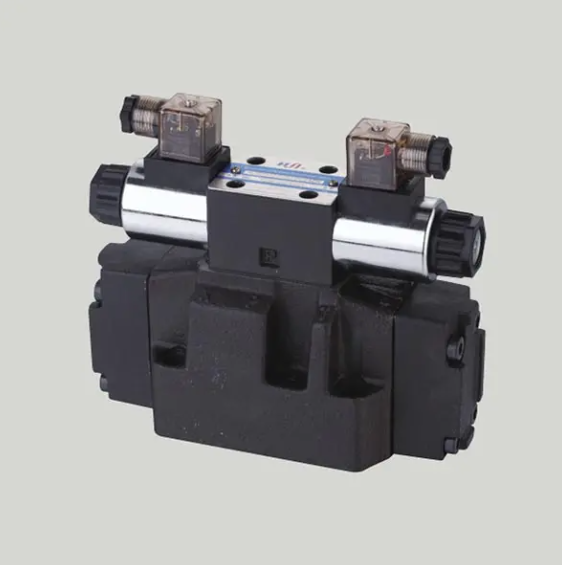
4DWHG series SOLENOID PILOT OPERATED DIRECTIONAL VELVES are vital hydraulic components. They precisely control the direction of fluid flow within a hydraulic system. Electrical signals initiate their operation, actuating a pilot stage. This pilot stage then effectively shifts the main spool, directing the hydraulic fluid.
Key Takeaways
- Solenoid pilot operated valves control fluid direction in hydraulic systems. They use a small electrical signal to move a larger main part, guiding the fluid.
- These valves offer precise control and can handle large amounts of fluid. They are good for remote control and work well in tough industrial and mobile machines.
- Choosing the right valve means checking fluid flow, pressure, and electrical needs. Also, pick the correct internal setup for your machine’s job.
What Are Solenoid Pilot Operated Directional Valves?
Defining Directional Control in Hydraulics
Directional control in hydraulic systems is crucial for managing how fluid moves. Control valves are essential components for regulating the flow of hydraulic fluid. They directly influence the speed and direction of movement within the system. For example, to initiate descent, the control valve releases fluid from the cylinder. This action allows the piston to lower gradually due to gravity. The system precisely manages the rate of descent by adjusting the fluid flow through the valve. This precise control ensures machinery operates safely and efficiently.
The Solenoid Pilot Operated Mechanism
A solenoid pilot operated directional valve uses a two-stage process to control fluid flow. First, an electrical signal activates a small solenoid. This solenoid then shifts a smaller, internal pilot valve. The pilot valve directs a small amount of hydraulic fluid, known as pilot pressure, to one side of the main spool. This pilot pressure then moves the larger main spool. The main spool’s movement changes the path of the main hydraulic fluid flow. This two-stage design allows a small electrical signal to control a much larger flow of hydraulic fluid. This mechanism makes SOLENOID PILOT OPERATED DIRECTIONAL VELVES highly effective for heavy-duty applications.
Understanding the 4DWHG Series
The 4DWHG series represents a specific type of solenoid pilot operated directional valve. The “4D” often indicates a four-way valve, meaning it has four ports for fluid connection. The “WHG” part of the designation typically refers to specific design characteristics or performance capabilities from the manufacturer. These valves are known for their robust construction and reliable performance in demanding industrial environments. Engineers select 4DWHG valves for applications requiring precise and powerful hydraulic control.
How Solenoid Pilot Operated Directional Valves Function
The Role of the Pilot Stage
The pilot stage acts as the initial control mechanism for SOLENOID PILOT OPERATED DIRECTIONAL VELVES. An electrical signal energizes a solenoid. This action causes the solenoid to shift a small internal pilot valve. This type of piloting is ‘Pilot actuated’. The pilot fluid is typically ‘Internal’, meaning it comes from within the valve’s own system. This small pilot valve then directs a controlled amount of pilot fluid pressure. This pressure moves the larger main spool. Engineers can also install a cartridge directly into a cavity of pilot-operated valves. This provides integrated pilot control. This integration eliminates the need for separate pilot lines. It also means only one cavity needs machining to accommodate both the control and primary functions.
Main Spool Operation and Fluid Direction
The pilot pressure, directed by the pilot stage, applies force to one end of the main spool. This force causes the main spool to slide within the valve body. The main spool has lands and grooves. These lands and grooves align with different ports as the spool moves. This alignment creates specific pathways for the main hydraulic fluid. For example, when the spool shifts, it might connect the pressure port to one work port and the other work port to the tank. This action effectively changes the direction of fluid flow to an actuator, such as a cylinder or motor.
Flow Paths and Valve Positions
Directional valves typically offer multiple positions. Each position defines a unique set of flow paths for the hydraulic fluid. A common configuration is a 4-way valve. This valve has four ports: pressure (P), tank (T), and two work ports (A and B). In a neutral position, the valve often blocks all ports or connects them in a specific way to hold an actuator in place. When the main spool shifts to one side, it might connect P to A and B to T. This sends fluid to one side of a cylinder. Shifting the spool to the other side reverses the connections, sending fluid to the other side of the cylinder. These distinct positions allow precise control over the movement of hydraulic components.
Spring Return Versus Detent Mechanisms
Solenoid pilot operated directional valves use different mechanisms for spool positioning. A spring return mechanism is common. Here, springs push the main spool back to a default, center, or normal position when the solenoid de-energizes. This provides a fail-safe or default state for the system. Conversely, detent mechanisms hold the main spool in its last shifted position. The spool remains in that position even after the electrical signal to the solenoid is removed. This is useful for applications where the valve needs to maintain a specific flow path without continuous electrical power. Detent valves require a new electrical signal to shift the spool to another position.
Key Components of 4DWHG Solenoid Pilot Operated Directional Valves
Understanding the individual parts of 4DWHG SOLENOID PILOT OPERATED DIRECTIONAL VELVES helps clarify their operation. Each component plays a specific role in controlling hydraulic fluid.
Solenoids: The Electrical Actuators
Solenoids are the electrical heart of these valves. They convert electrical energy into mechanical motion. When an electrical current flows through the solenoid coil, it creates a magnetic field. This magnetic field pulls a metal plunger, or armature, into the coil. This movement provides the initial force to shift the pilot valve.
The Pilot Valve (Pilot Stage)
The pilot valve is a small, internal directional valve. It acts as the first stage of control. The solenoid’s movement directly shifts this pilot valve. The pilot valve then directs a small amount of hydraulic fluid, known as pilot pressure. This pilot pressure moves the larger main spool.
The Main Spool
The main spool is a cylindrical component located within the valve body. It features precisely machined lands and grooves. Pilot pressure pushes the main spool. As the spool moves, its lands and grooves align with different ports in the valve body. This alignment creates specific pathways for the main hydraulic fluid flow.
Valve Body and Fluid Passages
The valve body forms the main housing of the directional valve. It contains all the internal components. The body also has machined passages and ports. These passages guide the hydraulic fluid through the valve. The ports connect to the pressure line, tank line, and the hydraulic actuator.
Springs for Spool Positioning
Springs are crucial for positioning the main spool. They provide a restoring force. In spring-return valves, springs push the spool back to a neutral or default position when pilot pressure is removed. Detent mechanisms, however, use springs and balls to hold the spool in a specific position until another signal shifts it.
Advantages of 4DWHG Solenoid Pilot Operated Directional Valves
Benefits of Remote Control and Precision
4DWHG valves offer significant advantages through remote control. Operators can manage hydraulic systems from a distance using electrical signals. This capability enhances safety by removing personnel from hazardous areas. It also allows for precise control over actuator movements. The electrical signals provide accurate and repeatable positioning, which is crucial for many industrial processes. This precision minimizes errors and improves the quality of work.
High Flow Capacity and Fast Response
These valves handle substantial fluid volumes. For example, a typical pilot-operated servo valve boasts a Kv value of 44 m³/h and a Cv value of 51.04 gal/min. This demonstrates their ability to manage high flow rates efficiently. The FLeX Series valve, a solenoid-operated 2-way, 2-position cartridge, offers a capacity of 7 gpm (28 L/min). It functions as a direct-acting directional poppet valve with a soft shift feature. This design ensures quick response times. The rapid shifting of the main spool allows for immediate changes in fluid direction. This quick action is vital for dynamic applications requiring fast machine movements.
Enhanced System Control
4DWHG solenoid pilot operated directional valves significantly improve overall system control. Their two-stage operation allows a small electrical input to manage large hydraulic forces. This design provides robust and reliable performance. The ability to precisely direct fluid flow enhances the efficiency and responsiveness of hydraulic machinery. Engineers can integrate these valves into complex automation systems. This integration leads to more sophisticated and automated control sequences. The result is a more efficient and productive hydraulic system.
Applications of 4DWHG Solenoid Pilot Operated Directional Valves
Industrial Machinery Integration
Industrial machinery widely uses 4DWHG solenoid pilot operated directional valves. They control the movement of heavy components in manufacturing plants. For example, these valves direct hydraulic cylinders in large presses. They also manage the precise movements of robotic arms on assembly lines. Their robust design ensures reliable operation in demanding factory environments. Manufacturers integrate these valves into systems requiring high force and accurate positioning.
Mobile Hydraulics Systems
Mobile hydraulics systems also heavily rely on these valves. Construction equipment like excavators and bulldozers use them. Agricultural machinery, such as tractors and harvesters, also incorporates them. These valves control functions like lifting, digging, and steering. Their compact size and durability make them ideal for vehicles operating in harsh outdoor conditions. They provide the necessary power and control for heavy-duty mobile applications.
Automation and Control Systems
4DWHG valves are crucial components in modern automation and control systems. They bridge the gap between electrical control signals and hydraulic power. Programmable Logic Controllers (PLCs) or other control units send electrical signals to the valve’s solenoids. The valve then translates these signals into precise hydraulic actions. This integration allows for automated sequences and remote operation. It enhances efficiency and safety in various automated processes.
Selecting the Right 4DWHG Solenoid Pilot Operated Directional Valve
Choosing the correct 4DWHG valve ensures optimal system performance. Engineers must consider several critical factors. Proper selection prevents operational issues and maximizes efficiency.
Considering Flow Rate and Pressure Requirements
System design dictates the required flow rate and pressure. The valve must handle the maximum flow without excessive pressure drop. High flow rates demand larger valve sizes. Conversely, the valve’s pressure rating must exceed the system’s maximum operating pressure. This prevents damage and ensures safe operation. Mismatched pressure ratings can lead to valve failure or system inefficiency. Always consult the manufacturer’s specifications for these parameters.
Matching Voltage and Electrical Specifications
Electrical compatibility is paramount. The valve’s solenoids require a specific voltage and current. Common voltages include 12V DC, 24V DC, 110V AC, and 220V AC. The control system’s power supply must match these requirements. Incorrect voltage can burn out the solenoid or prevent proper actuation. Consider the power consumption of the solenoids. Ensure the electrical system can supply adequate power.
Choosing the Correct Spool Configuration
The application determines the necessary spool configuration. Spool types define the flow paths in different valve positions. Common configurations include 2-position, 3-position, open center, and closed center. A 3-position valve often provides a neutral state, holding an actuator in place. A 2-position valve offers simple on/off control. Open center spools allow fluid to return to the tank in neutral. Closed center spools block all ports in neutral. Select the spool configuration that precisely matches the hydraulic circuit’s functional needs.
Troubleshooting Common Issues with 4DWHG Solenoid Pilot Operated Directional Valves
Operators sometimes encounter problems with 4DWHG valves. Effective troubleshooting helps restore system function quickly. Identifying the root cause of an issue is crucial for proper repair.
Diagnosing No or Slow Movement
An actuator that does not move or moves slowly often indicates a problem. First, check the hydraulic power unit. Ensure it delivers sufficient pressure and flow. Low system pressure can prevent the main spool from shifting fully. Blockages in the lines or within the valve itself also restrict fluid movement. Contaminated fluid can clog small pilot passages. This prevents the pilot stage from operating correctly. Verify the pilot pressure supply.
Addressing Erratic Valve Operation
Erratic valve operation suggests inconsistent control. The actuator might move intermittently or unpredictably. This often points to electrical issues. A loose wire connection to the solenoid can cause intermittent signals. A faulty solenoid coil might also lead to inconsistent shifting. Mechanical binding of the main spool can also cause erratic movement. Contamination or damage to the spool surface creates friction. This prevents smooth operation.
Basic Electrical and Hydraulic Checks
Begin troubleshooting with basic checks. First, inspect all electrical connections to the solenoids. Ensure they are secure and free from corrosion. Use a multimeter to test solenoid coil resistance. Compare readings to manufacturer specifications. Next, check hydraulic fluid levels and quality. Dirty or low fluid causes many problems. Verify system pressure at various points. Listen for unusual noises from the pump or valve. These simple steps often reveal the problem’s source.
4DWHG series SOLENOID PILOT OPERATED DIRECTIONAL VELVES are crucial for effective hydraulic control. Their innovative two-stage operation delivers precise and high-capacity fluid direction. Mastering their components and understanding their function is essential for successful hydraulic system management. This knowledge ensures optimal performance and reliability in diverse applications.
FAQ
What is the primary function of a 4DWHG valve?
A 4DWHG valve controls hydraulic fluid direction. Electrical signals activate a pilot stage. This action shifts the main spool, guiding the fluid.
How does a solenoid pilot operated valve differ from a direct-acting valve?
Pilot-operated valves use a small pilot stage to shift a larger main spool. Direct-acting valves shift the main spool directly. This allows for higher flow control.
What does “4DWHG” signify in the valve’s name?
“4D” often indicates a four-way valve configuration. “WHG” typically refers to specific design characteristics or a manufacturer’s series designation.