

 Introducing the newly launched LPS pressure switch, engineered for unparalleled precision in automotive assembly lines. Its CE certification guarantees reliability, safety, and compliance in critical manufacturing processes. This advanced solution elevates monitoring standards and operational efficiency.
Key Takeaways
- The new LPS pressure switch offers very precise monitoring. It helps automotive assembly lines work better and more efficiently.
- CE certification means the LPS pressure switch meets high safety rules. This makes it reliable and safe for use in Europe.
- This pressure switch helps car factories. It makes products better and lowers costs by preventing problems and reducing machine downtime.
Advanced Engineering of the New LPS Pressure Switch
Precision Monitoring Capabilities of the LPS Pressure Switch The new LPS pressure switch offers exceptional precision. It accurately monitors pressure across a broad spectrum. This includes pressures from 3 MPa to 35 MPa. This range translates to approximately 435 psi to 5076 psi. Such capabilities ensure precise control in demanding automotive environments. The LPS pressure switch uses a microswitch for signaling. This mechanism controls the on/off status of hydraulic components. It allows actuators to operate or stop as needed. The design provides a wide pressure control range. It also offers easy operation and simple installation.
Robust Design and Technical Specifications of the LPS Pressure Switch
The LPS pressure switch features a robust design. It withstands harsh industrial conditions. Its body consists of glass-filled nylon. This material provides superior strength and durability. It also resists wear and tear. The diaphragm is made from Viton. Viton offers enhanced chemical resistance. It ensures durability under extreme conditions. The spring uses SS 316 stainless steel. This material provides excellent corrosion resistance. It ensures long-lasting performance. The switch has all-plastic wetted parts. These parts resist corrosion. They offer an extended lifespan and reliable performance. The LPS pressure switch has a maximum working pressure of 35 MPa. The maximum operating temperature is 60°C. It operates with a maximum voltage of 240V. The unit weighs 0.8 kg.
Innovative Plunger-Type Mechanism for Reliable Control
The LPS pressure switch incorporates an innovative plunger-type mechanism. This mechanism ensures reliable control. It uses a microswitch to send signals. This allows precise control over hydraulic components. The system can activate or deactivate machinery. This ensures smooth operation in assembly lines. Plunger mechanisms are known for their durability. Some similar push-pull solenoid actuators have a validated lifespan of at least 200,000 cycles. Others are rated for a minimum of 300,000 cycles. Certain automatic equipment solenoids achieve at least 500,000 cycles. This robust design contributes to the long-term reliability of the LPS pressure switch.
The Critical Role of CE Certification for the LPS Pressure Switch
Ensuring Compliance and Market Access in Europe
CE certification is essential for products entering the European market. It signifies compliance with European Union safety, health, and environmental protection directives. The Pressure Equipment Directive (PED 2014/68/EU) specifically covers industrial pressure switches. This directive applies to the design, manufacture, and conformity assessment of pressure equipment. It includes safety accessories like pressure switches. The PED classifies equipment into risk categories based on fluid type, pressure, and volume. Manufacturers face prosecution, fines, and product confiscation for selling non-CE marked devices. The General Product Safety Regulation (GPSR) also requires a technical file for all products sold in the EU. This file demonstrates product safety.
Guaranteeing Safety and Reliability in Automotive Applications
CE certification guarantees the safety and reliability of the LPS pressure switch in automotive applications. The PED ensures that safety accessories, such as pressure switches, protect equipment. They prevent pressure from exceeding allowable limits. This is critical in high-stakes automotive assembly lines. Certified components reduce the risk of accidents and operational failures. They provide peace of mind for manufacturers. This certification confirms the product meets rigorous safety standards.
Building Trust Through Certified Quality Standards
Certified quality standards significantly impact customer perception and purchasing decisions. They ensure consistent quality control (QC) during production. When QC is embedded, customers receive reliable, safe, and durable products. This builds trust and loyalty. As Ishikawa states, “the proof of high quality is the satisfaction of ever changing consumer expectations.” This consistency makes customers more likely to return. It also enhances a brand’s reputation. Prioritizing QC demonstrates a commitment to excellence.
Transforming Automotive Assembly Lines with the LPS Pressure Switch

Optimizing Process Control and Efficiency
The LPS pressure switch significantly enhances process control and efficiency in automotive assembly lines. High-precision pressure controllers eliminate issues caused by sensor drift. This leads to ultra-precise pressure measurement and control. Implementing these controllers reduces downtime and improves productivity for both tool builders and end-users. High-precision pressure switches achieve output readings with accuracy down to or below +0.07% FS RSS (Full Scale, Root Sum Squared method). This high accuracy comes from reduced noise influence and digital linearization processes. Sensors use high-frequency signals (20-40 MHz) instead of analog signals. This effectively reduces conducted noise entering the circuit. These high-frequency signals are precisely measured and ready for digital signal processing. The LPS pressure switch provides the exact data needed for optimal operation.
Enhancing Quality Assurance and Defect Prevention
Precise pressure measurements are crucial for monitoring trends and identifying minor variations over time. Even if a gauge is not perfectly accurate, consistent and repeatable readings offer valuable insights into process behavior and equipment performance. This capability to detect subtle shifts is key to early identification of potential manufacturing defects. The LPS pressure switch delivers consistent and reliable data. This allows manufacturers to spot anomalies quickly. Early detection prevents small issues from becoming major problems. This proactive approach ensures higher quality products and reduces waste.
Reducing Downtime and Operational Costs
Unscheduled downtime in automotive assembly lines carries a very high cost. The cost of a lost hour in manufacturing now ranges from an average of $39,000 to over $2 million. The automotive industry experiences the highest costs. The cost of an hour’s downtime in an automotive plant has increased by more than 50% since 2019–2020. It now exceeds $2 million, up from $1.3 million. A 2024 analysis by Siemens estimates the average cost of automotive downtime at $2.3 million per hour. This is double the cost reported in 2019.
The LPS pressure switch helps mitigate these costs by enabling predictive maintenance (PdM). PdM uses data-driven technologies to monitor equipment health in real-time. It anticipates problems before they occur. This allows maintenance teams to schedule repairs and part replacements at optimal times. It reduces risk and avoids emergency shutdowns. Key tools include flow and pressure monitoring to detect efficiency loss. This provides early warnings of developing issues before they become critical. Companies continuously evaluate equipment using data from machine sensors, including pressure. This data feeds into performance-monitoring software. AI algorithms analyze this data to build detailed models of equipment health. This enables more confident failure prediction and useful recommendations on what to fix and when. This real-time monitoring allows predictive maintenance to dynamically respond to and spot anticipated problems, root causes, and needed repairs.
Ningbo Hanshang Hydraulic: A Legacy of Excellence in Hydraulic Solutions
Decades of Innovation and Manufacturing Prowess
Ningbo Hanshang Hydraulic began its journey in 1988. It was formerly known as Zhenhai Engineering Hydraulic Valve Factory. The company has since evolved into a comprehensive industrial entity. It integrates hydraulic valve and system design, research, production, and international trade. This long history demonstrates a deep commitment to the hydraulic industry. Hanshang Hydraulic consistently leads innovation. It pursues excellence as a core principle. The company also shares its achievements, fostering strong partnerships. Its ultimate goal is to become a renowned brand in the hydraulic field.
State-of-the-Art R&D and Testing Facilities
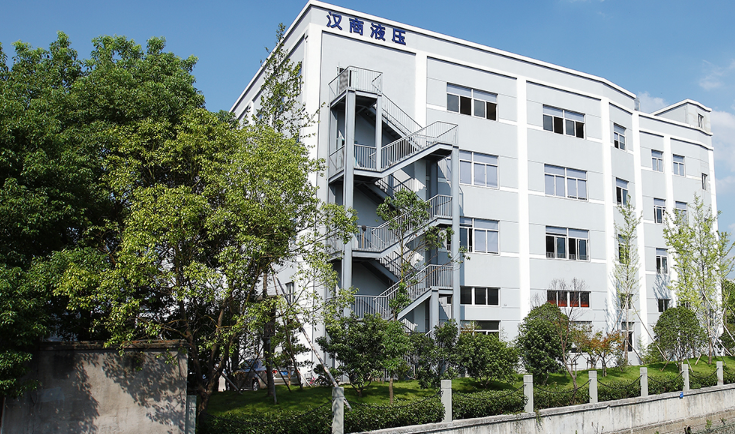
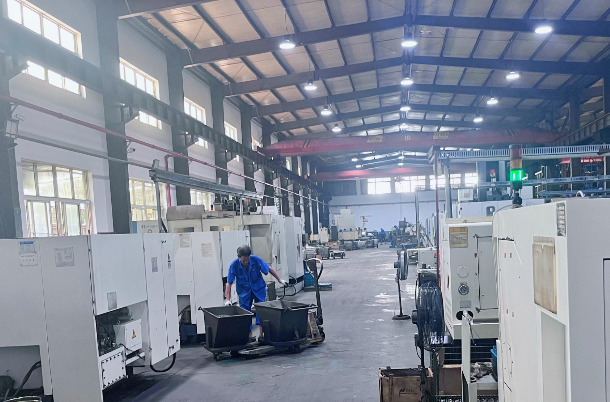
Hanshang Hydraulic operates on a vast 12,000 square meter site. Its standard workshop covers 10,000 square meters. The company utilizes over a hundred advanced machines. These include CNC full-function lathes, machining centers, high-precision grinders, and honing machines. To support high-pressure, high-flow hydraulic valve development, Hanshang Hydraulic collaborated with Zhejiang University. They developed a hydraulic valve test bench. This system includes data acquisition. It tests pressures up to 35 MPa and flows up to 300 L/Min. This ensures precise evaluation of dynamic, static, and fatigue life performance for various hydraulic valves.
Commitment to Quality and Digitalized Production
Hanshang Hydraulic established an innovative R&D team. They use advanced 3D design software like PROE. Solidcam ensures high efficiency, reliability, and accuracy in product development and manufacturing. The company continuously invests in production, management, and warehouse systems. It achieved an efficient management model. This integrates product R&D, sales orders, production execution, data collection, and warehousing. Recently, Hanshang Hydraulic introduced automated warehousing equipment. It implemented WMS and WCS warehouse management systems. In 2022, the company received recognition as a digital workshop. It also holds ISO9001-2015 quality management system certification. All its hydraulic valves for export to Europe carry CE certification. These efforts ensure the company provides customers with stable and reliable hydraulic products.
The new LPS pressure switch sets a benchmark for precision and reliability in automotive monitoring. Its CE certification provides a strategic advantage for manufacturers. Automotive leaders should adopt this advanced solution for superior performance and compliance. Hanshang Hydraulic remains committed to innovation and customer success.
FAQ
What is the primary advantage of the new LPS pressure switch?
The LPS pressure switch offers unparalleled precision monitoring. It ensures optimal control and efficiency in automotive assembly lines. Its robust design guarantees reliability.
Why does CE certification matter for the LPS pressure switch?
CE certification confirms the LPS pressure switch meets strict European safety and quality standards. This ensures compliance, market access, and reliability in critical applications.