

Effectively selecting and applying HydraForce cartridge valves is crucial for optimizing hydraulic system performance and efficiency in 2025. Engineers must precisely choose each cartridge valve to meet specific operational demands. This careful consideration ensures peak system functionality and longevity.
Key Takeaways
- Choose the right HydraForce valve for your system. This makes your hydraulic system work best. It saves energy and money.
- HydraForce valves are small and strong. They make hydraulic systems simpler. They also last longer and need less repair.
- New HydraForce valves are smart. They use sensors and connect to the internet. This helps them work better and tells you when they need fixing.
Understanding HydraForce Cartridge Valve Technology in 2025
What are HydraForce Cartridge Valves and their benefits?
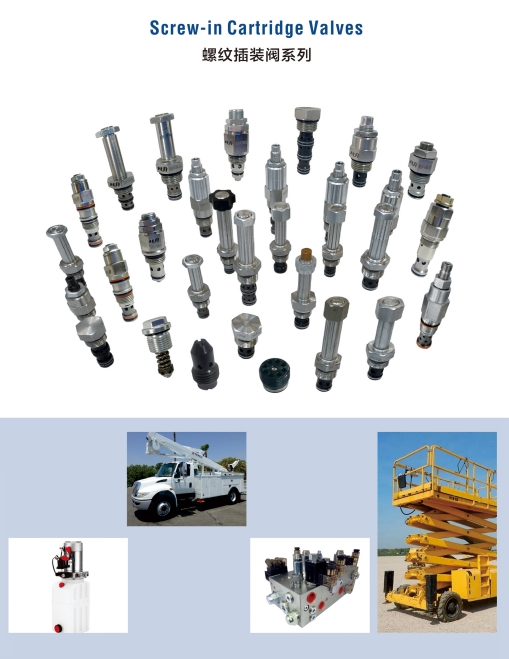
HydraForce cartridge valves are compact, screw-in hydraulic control devices. They fit into a manifold block, becoming an integral part of the hydraulic circuit. Engineers value these valves for their versatility and efficiency. They offer numerous benefits. These include reduced plumbing, which minimizes leak points and simplifies system design. Their modular nature allows for easy installation and replacement. This contributes to lower maintenance costs and increased uptime. Furthermore, cartridge valves provide excellent performance in demanding applications due to their robust construction.
Key advancements in HydraForce cartridge valve series for 2025
HydraForce continues to innovate its cartridge valve series. For 2025, advancements focus on enhanced precision and durability. Manufacturers integrate new materials for improved corrosion resistance and extended operational life. Digital communication capabilities are becoming more common, allowing for better integration with modern control systems. These advancements lead to more responsive and reliable hydraulic systems. They also contribute to greater energy efficiency across various industrial applications.
Why proper cartridge valve selection is critical for system efficiency
Proper selection of a cartridge valve is paramount for achieving optimal system efficiency. An incorrectly chosen valve can lead to several issues. These include excessive pressure drops, which waste energy and generate heat. It can also result in sluggish system response or even premature component failure. Engineers must match the valve’s specifications precisely to the application’s flow, pressure, and control requirements. This careful matching ensures the hydraulic system operates at its peak performance, maximizing productivity and minimizing operational costs.
Step-by-Step Selection Guide for HydraForce Cartridge Valves
Defining application requirements for cartridge valves
Engineers begin the selection process by thoroughly defining the application’s specific requirements. This crucial first step ensures the chosen HydraForce component precisely matches operational needs. They consider various critical performance parameters for a hydraulic system.
- System Repeatability: This is essential for hydraulic stability. Engineers eliminate air pockets to prevent volumetric errors and enhance repeatability.
- Stable Process Conditions: Maintaining consistent pressure, temperature, and flow rate is vital. This prevents flowmeters from operating unpredictably and affecting accuracy.
- Pulsating Flow Management: Incorporating pressure regulators and pulsation dampers is crucial. Selecting appropriate pump types also helps achieve smooth and constant flow.
- Strategic Placement of Flowmeters: Positioning flowmeters just before the dispense valve minimizes fluid inertia. This improves measurement accuracy.
- Understanding the Impact of Viscosity on Flowmeter Accuracy: The selection of flow measurement devices must consider fluid viscosity. Different flowmeter types, such as turbine versus positive displacement, are affected differently.
- Valve Selection and Calibration: The type of shut-off valve impacts delivery accuracy. Solutions like fast-acting solenoids or multi-stage shut-off systems fine-tune results.
- Optimizing Electronic Flowmeters: High-performance meters can predict stop signals. This ensures consistent delivery even at high speeds.
Hydraulic engineering relies on fluid dynamics. This is essential for designing, maintaining, and optimizing hydraulic systems. Engineers use key hydraulic formulas to calculate critical system properties. The most important calculations for system performance include:
- Force (F), Pressure (p), and Area (A), related by formulas like F = p × A.
- Speed (S), Flow Rate (Q), and Area (A), related by formulas like Q = S × A.
These calculations guide the initial selection of a suitable cartridge valve.
Environmental considerations for cartridge valve selection
The operating environment significantly influences valve selection. Engineers must assess factors such as ambient temperature, humidity levels, and the presence of corrosive agents or airborne contaminants. Extreme temperatures demand specific seal materials and valve body constructions. High humidity or corrosive atmospheres require materials with enhanced resistance to rust and degradation. Vibration and shock loads also play a role. They necessitate robust designs and secure mounting options to ensure long-term reliability.
Fluid compatibility and seal material for cartridge valves
Selecting the correct fluid and seal material is paramount for valve longevity and performance. Hydraulic systems use various fluids, including mineral oils, synthetic fluids, and water-glycol mixtures. Each fluid possesses unique chemical properties. Engineers must ensure the valve’s internal components and seals are compatible with the chosen fluid. Incompatible materials can lead to seal degradation, leakage, and premature valve failure. Common seal materials include Buna-N (nitrile), Viton (fluorocarbon), and EPDM (ethylene propylene diene monomer). Each offers different temperature ranges and chemical resistances.
Porting configurations and cavity requirements for cartridge valves
HydraForce cartridge valves come in various porting configurations. These include 2-way, 3-way, and 4-way designs. Each configuration serves a specific function within the hydraulic circuit. Engineers must match the valve’s porting to the required flow path. Cavity requirements are equally important. A cavity is the machined bore in a manifold block where the valve installs. HydraForce standardizes these cavities. For example, the HydraForce FR10-39C-0-N valve utilizes a VC10-3 cavity. This is a 10-size-3-way cavity. Further details on 10-size-3-way cavities are available through HydraForce resources. Available housings for 10-3w valves can be found on the HydraForce website. Proper cavity selection ensures a secure fit and correct hydraulic connections.
Electrical considerations for solenoid cartridge valves
When selecting solenoid valves, engineers must consider several electrical parameters. These include voltage, current, and power consumption. Matching the valve’s coil voltage to the system’s electrical supply prevents damage and ensures proper operation. They also evaluate connector types, such as Deutsch or AMP, for compatibility with existing wiring harnesses. Duty cycle, which indicates how long the solenoid can remain energized, is another critical factor. Response time, the speed at which the valve opens or closes, also impacts system performance.
Sizing and pressure drop calculations for cartridge valves
Correctly sizing the valve is crucial for system efficiency. An undersized valve can cause excessive pressure drop. This wastes energy, generates heat, and reduces overall system performance. Conversely, an oversized valve might lead to sluggish response or unnecessary cost. Engineers perform pressure drop calculations based on the required flow rate and fluid viscosity. They use flow curves provided by HydraForce to determine the optimal valve size. This ensures the valve handles the necessary flow with minimal energy loss.
Utilizing HydraForce’s 2025 product catalog for cartridge valve selection
The HydraForce 2025 product catalog serves as an indispensable resource for engineers. It provides comprehensive technical specifications, performance data, and dimensional drawings for each valve. Engineers use the catalog to identify suitable valves based on their application requirements. The catalog also highlights new products and technological advancements. For instance, the TS90-G34L valve, a pilot-operated proportional pressure reducing/relieving valve, offers enhanced efficiency for powershift transmissions. It reduces pilot flow by up to 75%. This leads to smaller pumps, lower energy consumption, and reduced operational costs. Its two-stage operation provides smoother gear shifting, precise control, improved damping, and reduced sensitivity to temperature/viscosity changes. The low-leakage design minimizes energy consumption, potentially saving 90% in annual energy per valve. The catalog also features tools like the HF-Impulse 2.0 software development and configuration tool. This powerful and intuitive software platform is designed for ExDR controllers. It supports both graphical and text-based programming. This simplifies complex control logic and accelerates development, validation, and series production for developers and application engineers.
Optimizing Application and Usage of HydraForce Cartridge Valves
Proper installation techniques for HydraForce cartridge valves
Engineers must follow precise procedures when installing HydraForce cartridge valves. Proper installation ensures optimal performance and prevents premature failure. First, maintain absolute cleanliness. Contaminants can severely damage hydraulic systems. Thoroughly clean the manifold block cavities and the valve itself before assembly. Second, always adhere to the manufacturer’s specified torque values. Overtightening can deform the valve body or damage seals. Undertightening can lead to leaks. Third, confirm the correct orientation of the valve within its cavity. Incorrect placement can impede flow or prevent proper function. Finally, perform a pre-assembly check. Verify all O-rings and seals are present and undamaged. These steps are crucial for reliable operation.
Troubleshooting common issues with HydraForce’s components
Hydraulic systems can experience various operational problems. Engineers often encounter common issues with HydraForce’s components. If a system exhibits erratic operation, check for air in the hydraulic fluid or contamination. Air bubbles can cause spongy responses. Contaminants can obstruct valve movement. Leakage around these components often indicates damaged seals or improper torque. A complete lack of flow might point to a blocked orifice or a faulty solenoid coil in electrically actuated valves. Overheating can result from excessive pressure drop or an undersized valve. Systematic diagnosis, starting with the simplest checks, helps identify the root cause efficiently.
Maintenance best practices for HydraForce’s hydraulic components
Effective maintenance extends the lifespan and maintains the efficiency of HydraForce’s hydraulic components. Regular fluid analysis is paramount. It detects contamination, water ingress, and fluid degradation before they cause significant damage. Replacing hydraulic filters at recommended intervals prevents particulate buildup. Inspecting seals for wear or damage during routine maintenance helps prevent leaks. Establishing a preventive maintenance schedule, based on operating hours or environmental conditions, ensures timely checks and replacements. This proactive approach minimizes downtime and reduces repair costs.
Integrating HydraForce’s components with control systems
Modern hydraulic systems increasingly rely on sophisticated electronic control. Integrating HydraForce’s components with Programmable Logic Controllers (PLCs) or other electronic control systems enhances precision and responsiveness. HydraForce and Bosch Rexroth, for example, offer modular, compact hydraulic solutions. These solutions seamlessly combine hydraulic, electro-hydraulic, and electronic components. Products like the EDH-OBE compact directional valve feature built-in electronics. These electronics enable closed-loop control, PID tuning, and CAN bus compatibility. This integration provides superior responsiveness, stability, and precise control over hydraulic functions. HydraForce’s HF-Impulse 2.0 software development and configuration tool further simplifies this process. It supports both graphical and text-based programming for complex control logic. This accelerates development, validation, and series production for engineers. This integrated approach allows for scalable machine platforms. It adapts to various automation levels and digitalization strategies.
Real-world examples of efficient HydraForce’s hydraulic components
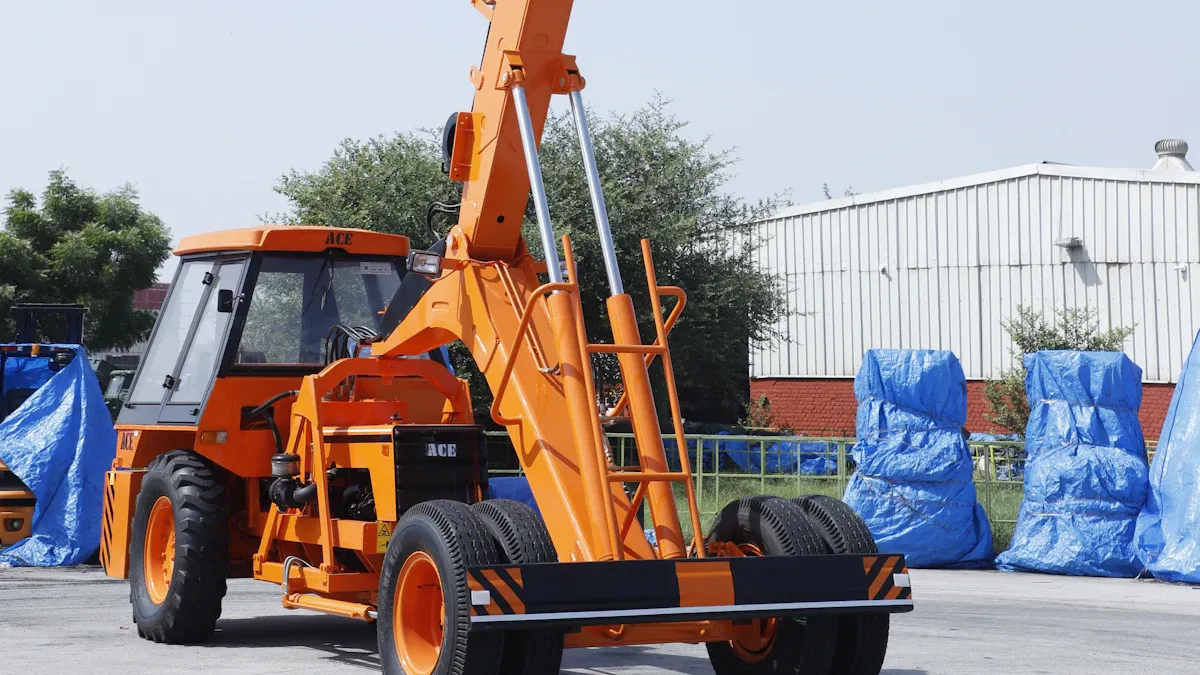
HydraForce’s hydraulic components demonstrate their efficiency across diverse industries. In mobile machinery, they control complex functions like boom articulation and implement movement on excavators and agricultural equipment. Their compact size allows for integration into tight spaces. This reduces overall machine footprint. In industrial automation, these components manage precise movements in manufacturing robots and assembly lines. They ensure high repeatability and speed. Agricultural machinery benefits from their robust design and precise control. This optimizes tasks such as planting, spraying, and harvesting. For example, a proportional flow control valve can precisely regulate the flow to a sprayer boom. This ensures uniform application of chemicals. This precision minimizes waste and maximizes crop yield.
Future Trends in HydraForce Cartridge Valve Technology
Smart cartridge valves and IoT integration
The future of hydraulic systems includes increasingly intelligent components. Smart cartridge valve technology integrates embedded sensors directly into the valve body. These sensors monitor pressure, temperature, and flow. IoT connectivity allows for continuous data collection and real-time condition monitoring. This reduces downtime significantly. Machine learning algorithms analyze sensor data. They predict potential failures before they occur, enabling predictive maintenance. Operators can also adjust valve parameters or troubleshoot systems remotely through connected platforms. This enhances control and operational flexibility.
Miniaturization and power density in cartridge valves
Engineers constantly seek smaller, more powerful hydraulic solutions. The trend towards miniaturization in cartridge valve technology continues. Manufacturers develop valves with higher power density. This means they deliver more hydraulic power from a smaller physical footprint. This advancement allows for more compact machine designs. It also frees up valuable space in complex hydraulic manifolds. These smaller, more efficient valves contribute to lighter equipment and reduced material usage.
Sustainability and energy efficiency of cartridge valves
Sustainability drives significant innovation in valve design. New cartridge valve designs focus on reducing energy consumption. For example, the LC8X logic cartridge valve minimizes pressure drops and optimizes variance. Computational Fluid Dynamics (CFD) simulations help reduce pressure drops. Finite Element Method (FEM) simulations reduce the valve’s weight by 10% compared to older versions. This directly contributes to energy efficiency. Digital hydraulics also play a role. Fast-switching valves, like LCM high-frequency valves, offer switching times under 1 ms. This enables high precision and fine-grained control. Such technology can increase cycle rates in machines while simultaneously reducing energy consumption. It achieves this through more precise and demand-oriented movement execution. Modular designs, like those for HAWE cartridge valves, further reduce installation space. This creates more compact and efficient system designs.
Mastering HydraForce cartridge valve selection and application is essential for peak hydraulic system efficiency. Engineers must implement these detailed strategies. This ensures optimal performance, reliability, and longevity for hydraulic systems in 2025 and beyond. These practices drive sustained operational excellence.
FAQ
What is the primary advantage of using HydraForce cartridge valves?
HydraForce cartridge valves offer compact design, reduced plumbing, and easy maintenance. They enhance system efficiency and reliability.
How does one properly select a HydraForce cartridge valve for an application?
Engineers define application requirements, consider environmental factors, and ensure fluid compatibility. They also perform sizing calculations and use the product catalog.
What role do “smart” cartridge valves play in future hydraulic systems?
Smart cartridge valves integrate sensors and IoT connectivity. They enable real-time monitoring, predictive maintenance, and remote control for enhanced system intelligence.