

 Pressure Regulating Valve Manufacturers customize solutions. They adapt designs, materials, and control mechanisms. This meets the distinct operational pressures, environmental conditions, and safety needs for the Oil & Gas, Semiconductor, and Construction sectors. The global pressure relief valves market will reach US$4.9 Billion in 2025. Pressure Regulating Valve Manufacturers: this market expects a 6-8% compound annual growth rate over the next five years.
Key Takeaways
- Standard valves do not work for all industries. Each industry has its own needs. This means valves must be made special for each job.
- Pressure valve makers create special valves for different industries. For example, oil and gas needs valves that can handle very hot and high-pressure conditions. Semiconductor factories need valves that keep things very clean. Construction sites need strong valves that can handle rough materials.
- Making special valves involves many steps. It starts with understanding what the customer needs. Then, engineers design and test the valves. This makes sure the valves work well and are safe for their specific use.
The Imperative for Customization by Pressure Regulating Valve Manufacturers
Why Standard Solutions Fall Short
Standard pressure regulating valves often fail to meet specific industrial requirements. Several factors contribute to these shortcomings. For example, the operating pressure might be too close to the valve’s set pressure. Ideally, the operating pressure should remain at least 20% lower than the set pressure for superior seat tightness. A minimum gap of 10% is always necessary. Systems can also experience spikes above their maximum allowable working pressure (MAWP), which prevents the valve from functioning correctly. Improperly supported outlet piping can cause the valve to bear weight, leading to improper seating and leakage. Using the wrong valve for an application is another common cause of failure. This often happens due to a lack of detailed knowledge about both the application and the equipment.
Valves also fail due to contaminant ingress, like dirt or rust, which clogs the valve seat or damages the diaphragm. This leads to erratic pressure regulation. Internal components wear out from mechanical stress, pressure fluctuations, or aggressive media. This causes leaks and uneven pressure delivery. Corrosion and chemical attacks weaken critical parts, causing seal failure. Incorrect sizing or selection of a valve for its intended flow and pressure range can cause instability or excessive wear. Operating above the maximum inlet pressure or experiencing sudden pressure spikes damages internal mechanisms. Incorrect installation practices, such as wrong flow direction, also increase mechanical stress and lead to premature failure. Finally, neglecting routine maintenance allows minor issues to escalate into major failures.
Unique Sectoral Challenges
Each industry presents distinct challenges that standard valves cannot address. Using non-customized pressure regulating valves often leads to operational inefficiencies. These include non-universal models due to the need for customization. Customized valves also have long supply cycles. Significant differences in external dimensions make early accurate dimensioning difficult. Installation spaces vary greatly across different industrial settings. Daily maintenance becomes complex and inconvenient because each custom valve has unique maintenance characteristics. Pressure Regulating Valve Manufacturers must therefore offer tailored solutions to overcome these hurdles.
Tailoring for Oil & Gas: Extreme Demands Met by Pressure Regulating Valve Manufacturers
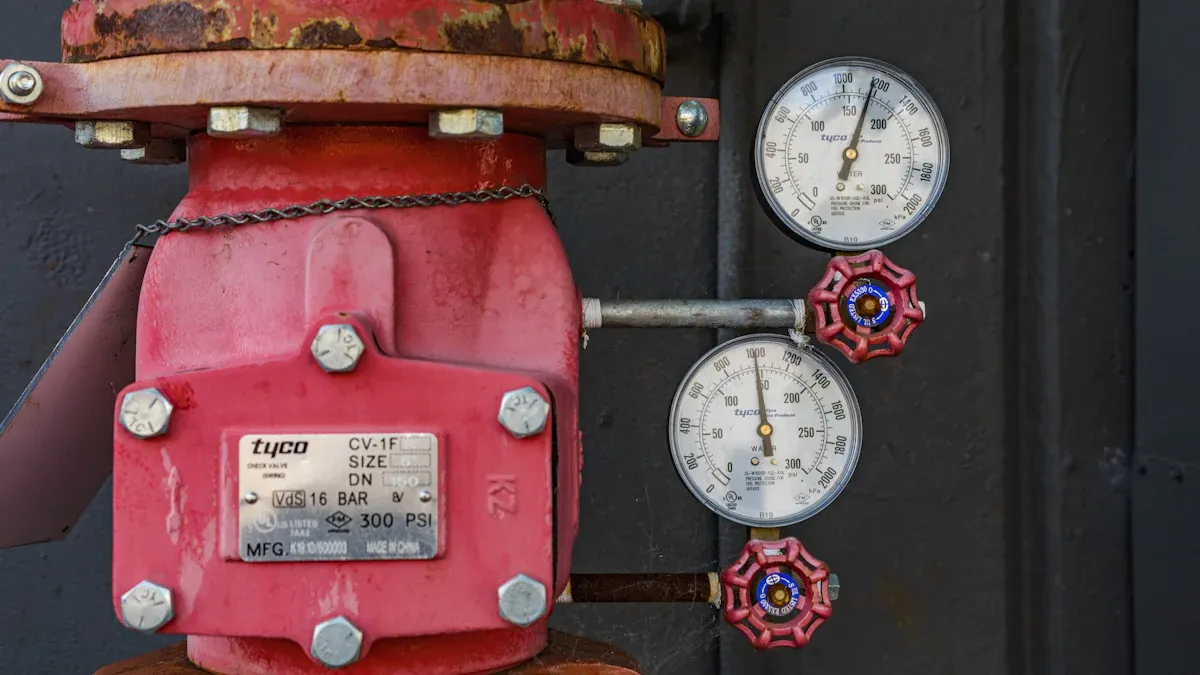
The oil and gas industry presents some of the most challenging environments for equipment. Pressure regulating valves must withstand immense forces and harsh conditions. Manufacturers develop specialized solutions for these demanding applications.
High-Pressure, High-Temperature Environments
Oil and gas operations involve extreme pressures and temperatures. Gas compression units, for example, often reach pressures between 400 and 2,000 PSI. The specific pressure depends on the compression stage. Frack units require high-pressure pumps, hoses, reinforced steel piping, and heavy-duty manifolds. These components handle the intense pressures needed for hydraulic fracturing. Conventional land drilling rigs operate under fluctuating temperatures. Temperatures can reach 400°F (204°C) or more. These rigs also endure constant mechanical stress.
Typical upstream oil and gas facilities often operate around 7 MPa (1015 psia). Temperatures are approximately 38 °C (100 °F). However, some applications push these limits much further. Specialized valves, like Saf-T-Matic valves, handle severe service. They can operate in a low range of 15 to 8,500 psi. A high range of 90 to 10,000 psi is also possible. Single pointer pressure gauges, used for pump pressure, measure up to 1,000 bar (15,000 psi). These figures highlight the need for robust and reliable valve solutions.
Specialized Material Selection
Corrosive agents are common in oil and gas extraction environments. These agents attack valve materials. Hydrogen sulfide, carbon dioxide, chlorides, and organic acids are frequently present. Oxygen also leads to corrosion, especially in water injection systems. Carbon dioxide causes ‘sweet corrosion.’ It reacts with moisture to form carbonic acid (H2CO3). This acid attacks steel, creating iron carbonate. This reaction occurs when CO2 partial pressure reaches 0.5 bar. Hydrogen sulfide (H2S) causes ‘sour corrosion.’ Concentrations above 0.15% cause sulfidation corrosion in plain and low-alloy steels. Chlorides have a fast adsorption rate to steel surfaces. They penetrate coating layers and react with metal oxides. This often causes pitting corrosion. Moisture reacts with CO2 to form carbonic acid, starting the corrosion process.
Material selection for pressure regulating valves in sour gas (H2S) environments follows strict criteria. NACE MR0175/ISO 15156 Standards are essential. These standards select materials that withstand hydrogen sulfide (H2S) without failure. They prevent stress corrosion cracking and sulfide stress cracking. Materials must effectively resist H2S to prevent degradation. The material also needs to be strong enough for high-pressure conditions. While some alloys cost more, their longevity leads to overall cost savings. Materials with high corrosion resistance require less frequent repair and upkeep. Alloys like Incoloy 825 and 925 meet NACE standards. They provide strong protection against sour gas damage. This is due to their high corrosion resistance and strength. Adherence to NACE recommendations is crucial for safe and long-lasting equipment. Understanding alloy limitations prevents costly consequences like leaks and system failures. Material reliability is key for corrosion-sensitive equipment. This includes valves, fittings, and instrumentation.
Advanced Design Considerations
Pressure regulating valve manufacturers incorporate advanced design features. These features address specific challenges in oil and gas applications. Special trims and careful design are essential for high differential pressure applications. They mitigate cavitation and noise. Computational Fluid Dynamics (CFD) simulation optimizes internal flow paths. This reduces turbulence and minimizes cavitation. Material specification considers erosion tolerance, corrosion resistance, and temperature compatibility. Hardfacing or surface treatment applies wear-resistant coatings. Stellite or tungsten carbide are examples. These coatings protect high-wear surfaces from erosion and cavitation. An anti-coking design prevents polymer buildup. This extends valve life, especially in polymer production.
Advanced trim designs minimize cavitation and erosion. This extends the valve’s service life and reduces maintenance needs. Multi-stage pressure reduction capabilities allow a single control valve to manage significant pressure drops. It maintains stable control. Special anti-cavitation trims use pressure staging technology to prevent cavitation. Valve constructions are optimized for flashing. When flashing occurs, selecting valves designed to endure the phenomenon is critical. These valves smoothly direct the flow out of the valve into the pipe. Examples include eccentric rotary plug valves and angle globe valves.
Precision for Semiconductor: Purity and Accuracy from Pressure Regulating Valve Manufacturers
 The semiconductor industry demands extreme precision and an environment free from contamination. Pressure regulating valves in this sector must meet stringent purity and accuracy standards. Even the smallest impurity can ruin an entire batch of sensitive electronic components.
Ultra-High Purity Requirements
Semiconductor manufacturing involves ultrafine nanoscale processes. Even the tiniest speck of contamination can lead to critical errors. Airborne particles like dust, viruses, bacteria, and human contamination (e.g., skin cells, hair) pose significant risks. They disrupt the manufacturing process and can cause product failure. Static electricity (electro-static discharge – ESD) also causes problems. Even microscopic ESD can create defects in silicon wafers and semiconductors. It attracts and adheres fine airborne particles to product surfaces. This often results in product rejection or failure.
The use of ultrapure water (UPW) is essential to maintain the highest standards of cleanliness. This ensures maximum semiconductor productivity and the production of flawless devices. Organic compounds from water can deposit on wafers, causing imperfections that degrade product quality. Even microscopic contamination leads to entire batches of wafers being rejected. This increases costs and reduces manufacturing output. Organic contaminants hinder optical clarity and react with photoresists. This causes improper patterning and defects. Total Organic Carbon (TOC) can form residues on wafers and alter the chemistry of cleaning solutions. This reduces their effectiveness and causes incomplete feature formation. Some organic compounds create corrosive byproducts or precipitate as unwanted deposits on wafers and equipment. Semiconductor manufacturing requires extremely low TOC levels (often below 1 ppb) in UPW. Failure to maintain this consistency leads to defects. Contaminants reduce device performance and reliability. This causes higher failure rates, customer dissatisfaction, and potential recalls.
Contamination Prevention and Material Choices
Pressure regulating valve manufacturers focus heavily on preventing contamination. They select specific materials and apply special treatments. For semiconductor manufacturing, hygienic materials such as stainless steel are required for regulators to maintain purity and prevent contamination. 316L Stainless Steel is commonly used for valves in semiconductor applications. It has an internal surface finish of 5 RA as a standard. Its corrosion resistance comes from a protective passive film of chrome oxide on wetted parts. A treatment process eliminates iron particles and oxide scale to achieve this. PVDF is utilized for valves in ultra-pure water applications within the semiconductor industry.
PFA-lined valves are increasingly preferred for critical applications. This is especially true for handling aggressive chemicals like hydrofluoric acid, sulfuric acid, and hydrochloric acid. They offer chemical inertness and structural stability across extreme temperatures. Their non-stick internal surfaces reduce contamination and ensure ultrapure process streams. Electropolishing is an electrochemical process that removes metallic impurities and smooths imperfections. It creates a clean inner surface. This method avoids embedded abrasives common in mechanical polishing, making it ideal for semiconductor applications. Passivation further cleans the surface and enhances corrosion resistance. It forms a chromium-rich passive oxide layer. A smooth internal surface finish is a general design feature. It reduces particle entrapment and material contamination.
Compact and Responsive Designs
Semiconductor fabrication plants often have limited space. This requires compact valve designs. These valves must also respond quickly to changes in pressure. Fast response times are crucial for maintaining stable process conditions. This prevents costly disruptions. Pressure regulating valve manufacturers develop miniature valves with high flow capabilities. They also integrate advanced control systems. These systems ensure precise and rapid pressure adjustments. This helps maintain the delicate balance required for semiconductor production.
Durability for Construction: Robust Solutions from Pressure Regulating Valve Manufacturers
The construction industry demands equipment that can withstand extreme conditions. Pressure regulating valves in this sector must be exceptionally robust. They face heavy-duty applications and abrasive media daily.
Heavy-Duty Applications and Abrasive Media
Construction sites often involve moving tough liquids. Slurries are a prime example. These liquids frequently consist mostly of solids. They can be grinding or eroding. Slurries are inherently corrosive and abrasive. This makes material selection for valves critical. Proper material choice prevents hindering production and equipment damage. Cement slurry, for instance, presents a significant challenge due to its abrasiveness. It can even erode pipes at bends. This necessitates robust equipment to withstand its abrasive properties.
Common abrasive media found in cement slurry include ground limestone and silica. Silica can be naturally occurring or added. Pyrite is another abrasive component. Other aggregates like shells, chalk, marl, shale, clay, slate, blast furnace slag, or iron ore also contribute. These vary depending on the quarry location and the cement application.
Resilient Material Selection
Pressure regulating valve manufacturers select resilient materials for construction applications. These materials ensure longevity and reliability. Ball valves designed for severe service use materials that withstand corrosive substances, extreme temperatures, and high pressures. These include stainless steels, exotic metals, and sometimes ceramics. Heavy-duty materials, often alloys and hardened steels, provide structural integrity. They resist the rigors of severe operating conditions. Control valves in severe service also feature designs that resist cavitation and erosion. This includes anti-cavitation trim designs and erosion-resistant materials.
For valve components handling abrasives, hard metals or metal alloys are crucial for wear areas. This includes abrasion-resistant plates, chromium carbide overlays, or metals like Hastelloy®. These materials reduce wear from material abrasion. Diverters can also feature replaceable wear liners. These liners are typically constructed from these materials. This extends the valve’s life cycle and reduces costs.
Several materials offer superior wear resistance. Tungsten carbide is a very hard compound. It is ideal for long-wearing surfaces and edges. It withstands extreme wear and abrasion with minimal material loss. Chromium carbide provides excellent protection from sliding wear and abrasion. It also withstands higher operating temperatures than tungsten carbide. Aluminum oxide is used in high wear applications. It offers excellent abrasion resistance. It withstands extreme abrasion and high temperatures, melting near 3,700°F. It also resists corrosion and chemical attack. Chrome oxide is an extremely hard and dense ceramic. It resists wear from sliding and abrasive particles. Its low coefficient of friction makes it ideal for applications with a risk of adhesive wear.
Dimensionally stable engineering plastics, specifically advanced polymers, are also used in high-performance valve applications. These plastic valve materials resist moisture and abrasion. Manufacturers can reliably machine them to tight tolerances. They help solve challenges like swelling due to moisture absorption, slippage due to abrasion, and part failure due to wear. They maintain form and function throughout an extended service life.
Design for Harsh Conditions
Pressure regulating valve manufacturers design their products for harsh outdoor construction environments. The body of the valve often uses stainless steel. This material offers corrosion resistance, robustness, and a longer life in demanding environments. Aluminum is another option for the body. It is lightweight and corrosion-resistant, which aids portability. Neoprene is a common material for diaphragms. It provides better resistance to atmospheric agents and ozone, making it suitable for outdoor use. Springs often use stainless steel. This ensures corrosion resistance, fatigue strength, and retains elasticity over many cycles. Overall, weather and corrosion-resistant materials are a general consideration for outdoor or marine environments.
Valve designs also incorporate features for enhanced durability. Housing materials are typically durable. Stainless steel or other corrosion-resistant alloys withstand harsh industrial conditions. Cleaning mechanisms are also important. These include backwashing, which reverses fluid flow to flush contaminants. Mechanical cleaning uses scrapers or brushes to remove debris. Self-cleaning mechanisms prevent clogging and damage from solid particles. Reinforced seats provide additional strength and resistance to wear. Wear-resistant components are crucial for longevity when dealing with abrasive materials. Durable materials, such as hardened alloys, ceramics, or composites, resist wear and corrosion.
The Customization Process of Pressure Regulating Valve Manufacturers
Pressure regulating valve manufacturers follow a structured process. This ensures they deliver solutions precisely tailored to client needs. This process involves several key stages.
Needs Assessment and Consultation
Manufacturers begin by thoroughly understanding a client’s specific requirements. They conduct detailed consultations. This helps them gather information about operational pressures, environmental conditions, and safety standards. This initial step is crucial for defining the scope of the custom solution.
Engineering and Design Innovation
Engineers then translate these requirements into innovative designs. They use advanced tools for this stage. Computer-aided engineering (CAE), also known as engineering simulation, has become an industry standard. Engineers use simulation to perform computational fluid dynamics (CFD) and other stress/thermal analyses. This optimizes valve performance. SimScale, a cloud-based CAE software, utilizes powerful CFD, heat transfer, and finite element analysis (FEA) capabilities. It helps accelerate design and optimize valve performance digitally. Manufacturers also employ meticulous design, material selection, and testing. They use precision machining, casting, and forging techniques. Advanced manufacturing processes like CNC machining ensure high accuracy. Finite element analysis assesses structural integrity. Computational fluid dynamics evaluates performance under specific fluid flows.
Manufacturing, Testing, and Certification
After design, manufacturers produce the valves. They subject each custom valve to rigorous testing. This ensures it meets performance specifications and safety standards. Certifications are vital for critical industrial applications. Organizations like the American Petroleum Institute (API) and the International Organization for Standardization (ISO) provide these. API develops technical standards for oil, gas, and related industries. ISO unifies quality expectations globally. ASME also provides standards for broader mechanical engineering applications. These certifications ensure valves are safe, durable, and perform well.
Installation and Ongoing Support
Proper installation is essential for optimal valve performance. Manufacturers provide guidelines for this. They advise securing the regulator body and installing isolation valves. They also recommend vertical mounting for through-body control valves. This prevents premature wear. Regulators are not shutoff devices; they should not be used for flow control. Manufacturers also offer ongoing support. This includes repair, maintenance, and tailor-made actuation solutions. They provide complete lifecycle management, from new valve setting to preventative maintenance. Services include 24/7 emergency support and mobile repair units.
Customized pressure regulating valves are indispensable for the Oil & Gas, Semiconductor, and Construction sectors. Pressure Regulating Valve Manufacturers ensure safety, efficiency, and compliance by precisely addressing unique operational challenges. Specialized design, material selection, and advanced engineering are critical for these diverse industries. These tailored solutions improve system reliability, extend service life, and reduce operating costs, offering significant long-term benefits. Future trends, including virtual prototyping and additive manufacturing, will further enhance these customized solutions.
FAQ
What makes customized pressure regulating valves essential for the Oil & Gas sector?
Customized valves handle extreme pressures and temperatures. They also resist corrosive agents. Pressure Regulating Valve Manufacturers design them for these harsh conditions, ensuring safety and operational efficiency.
How do Pressure Regulating Valve Manufacturers ensure purity for the semiconductor industry?
Pressure Regulating Valve Manufacturers use ultra-high purity materials like 316L Stainless Steel and PVDF. They also employ electropolishing and passivation. This prevents contamination, which is critical for sensitive semiconductor processes.
What materials do Pressure Regulating Valve Manufacturers use for construction applications?
Pressure Regulating Valve Manufacturers select resilient materials. These include hardened steels, chromium carbide, and tungsten carbide. These materials withstand abrasive media and harsh outdoor conditions, ensuring valve durability.